Share
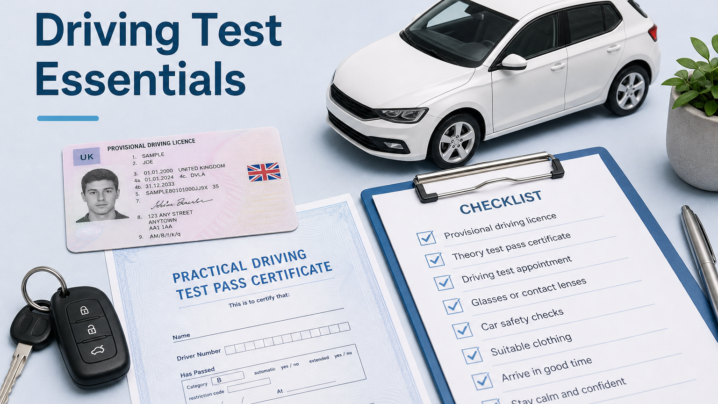
If your practical test is coming up, a clear driving test checklist can take away a lot of the stress. The good news is that the essentials are straightforward, and a little preparation can make test day feel much more manageable.
At FQ Driving Academy, we help learner drivers with practical UK driving lessons and theory test guides. In this guide, you’ll learn what to bring to your driving test, what to check before you leave, and how to avoid last-minute problems.
Driving test checklist: the essentials
Before you head to the test centre, make sure you have the items below ready. If anything is missing, your test could be cancelled and you may lose the fee.
1. Your UK driving licence
You must take the correct licence with you on the day of your test. Check that it is valid, easy to find, and matches your details.
If you need to update your address first, it’s best to sort that out in advance through the official DVLA process. You can find more guidance on how to change driving licence address.
2. Your theory test pass certificate
You need to have passed the theory test before you can take the practical test. In many cases, the pass details are recorded digitally, but it is still sensible to keep your confirmation information safe.
If you’re still working towards that stage, our guide on how to book your theory test in the UK can help you plan the next step.
3. A suitable car for the test
Most learners use their driving instructor’s car, but you can also use your own vehicle if it meets the test requirements. It must be roadworthy, insured, taxed, and suitable for the test.
The car should also have L plates displayed correctly and meet any rules that apply to your test category. GOV.UK has the official rules for the practical driving test and vehicle requirements at book and take your driving test.
Driving test checklist: what to check before you set off
Even if you have the right documents, a few extra checks can help the day run smoothly. These small steps can prevent avoidable stress.
Confirm the test centre location
Make sure you know exactly where you are going and how long the journey takes. If you are travelling to a test centre you are unfamiliar with, do a practice run beforehand if possible.
This is especially helpful if you are taking your test at a busier local centre. Our guide to the Mitcham driving test centre explains why preparation matters.
Arrive early
Plan to arrive with time to spare, not just on time. A calm arrival gives you a moment to breathe, park safely, and settle your nerves before the examiner calls you in.
Check the car is clean and ready
Your car does not need to be spotless, but it should be tidy and in good condition. Make sure mirrors are clean, tyres are properly inflated, and there are no warning lights showing on the dashboard.
Review any advice from your instructor
A quick chat with your instructor before the test can be really useful. They may remind you about common mistakes, manoeuvres that need extra care, or anything you should focus on in the last lesson.
If you want a broader pre-test preparation guide, read driving test day checklist: what to bring, what to check, and how to stay calm.
Driving test checklist: how to feel ready on the day
Being prepared is not only about paperwork and the car. It is also about giving yourself the best chance to stay calm and drive well.
Get a good night’s sleep
Tiredness can affect concentration, reaction time, and confidence. Try to get an early night before your test and avoid leaving everything until the last minute.
Eat and drink sensibly
A light meal before your test can help you stay focused without feeling sluggish. Drink enough water, but avoid anything that makes you feel uncomfortable or distracted.
Warm up with a short drive if needed
Some learners feel better after a few minutes behind the wheel before the test begins. If your instructor agrees, a short drive can help you settle into the right mindset.
Use breathing and positive self-talk
It is normal to feel nervous before a driving test. A few slow breaths and a calm, positive mental approach can help keep those nerves in check.
If confidence is a major issue for you, our article on how to build driving confidence before your test has practical tips you can use.
How many lessons do learner drivers usually need?
There is no fixed number of lessons that guarantees a pass. The official DVSA guidance often mentions that the average learner may need around 45 hours of lessons and 22 hours of private practice, but everyone learns at a different pace.
The best indicator is your readiness, not a number. Your instructor should be able to tell you whether you are test-ready or whether you would benefit from a few more sessions.
If you want to improve your chances of passing, it can help to understand the areas that often trip learners up. Our guide to driving test mistakes learners can fix before test day is a useful place to start.
What happens if you fail the driving test?
A failed test can feel disappointing, but it is not the end of the road. Many good drivers do not pass first time, and the important thing is to learn from the experience.
You can usually book another driving test straight away, but the next available date must be at least 10 working days after the fail. In the meantime, use the feedback from the examiner to focus your next lessons.
If you need a quicker date, our guide to driving test cancellations explains how earlier appointments can sometimes be found.
You can also read more about current driving test waiting times if you are planning your next steps.
Quick takeaway
Your driving test checklist does not need to be complicated. Bring the correct licence, make sure your theory test has been passed, and arrive in a suitable car that meets the rules.
From there, the best thing you can do is stay calm, trust your training, and focus on driving safely and consistently.
Frequently asked questions
What do I need to bring to my driving test?
You should bring your UK driving licence and make sure you have passed your theory test. You also need a suitable car if you are using your own vehicle or your instructor’s car.
Can I use my own car for the driving test?
Yes, you can usually use your own car as long as it meets the test requirements. It must be roadworthy, insured, taxed, and properly equipped for the test.
What happens if I forget my driving licence?
If you do not bring the correct licence, the test may be cancelled and you could lose your fee. Always check your documents before you leave home.
How many minors can you get and still pass?
There is no set number of minors that guarantees a pass, because the overall result depends on the seriousness of any faults. For a clearer explanation, see how many minors can you get and still pass your driving test.
Final thoughts
A calm, well-planned test day starts with the right preparation. Use this driving test checklist to make sure you have your documents, your car, and your mindset in the right place before you set off.
If you want more support as you get ready, explore more learner-friendly guidance from FQ Driving Academy. We’re here to help you move forward with confidence, from lessons and theory test prep to practical test day.